Roof Rats in Miami: A Homeowner's Guide
If you live in Miami-Dade and you have rats, you're almost surely dealing with roof rats. UF/IFAS calls Rattus rattus the worst rodent pest in Florida and the most abundant. This guide covers what they look like, how they spend a Miami year and how they end up in your attic.
What a Roof Rat Looks Like
UF/IFAS gives adult roof rats a length of 12 to 14 inches including the tail and a weight of 5 to 10 ounces. The tail is longer than the head and body, scaly and dark. Florida roof rats come in a few color patterns: black on top with a slate belly, gray with a lighter belly, or brownish gray with a white or cream belly. So a brown rat in a Miami attic is still very likely a roof rat.
A Year in a Miami Roof Rat's Life
Roof rats in Florida breed all year, according to UF/IFAS, with peaks in spring and fall. A female is mature at three to four months, has litters of five to eight after about three weeks, and can have four or five litters a year. With no cold winter to thin them out, a few rats in March can be a crowd by fall.
They're night animals. They leave the nest after dark, travel the same routes along wires, fences and branches, and get back before dawn. That's why the attic noise is worst late at night and early in the morning.
Where They Nest
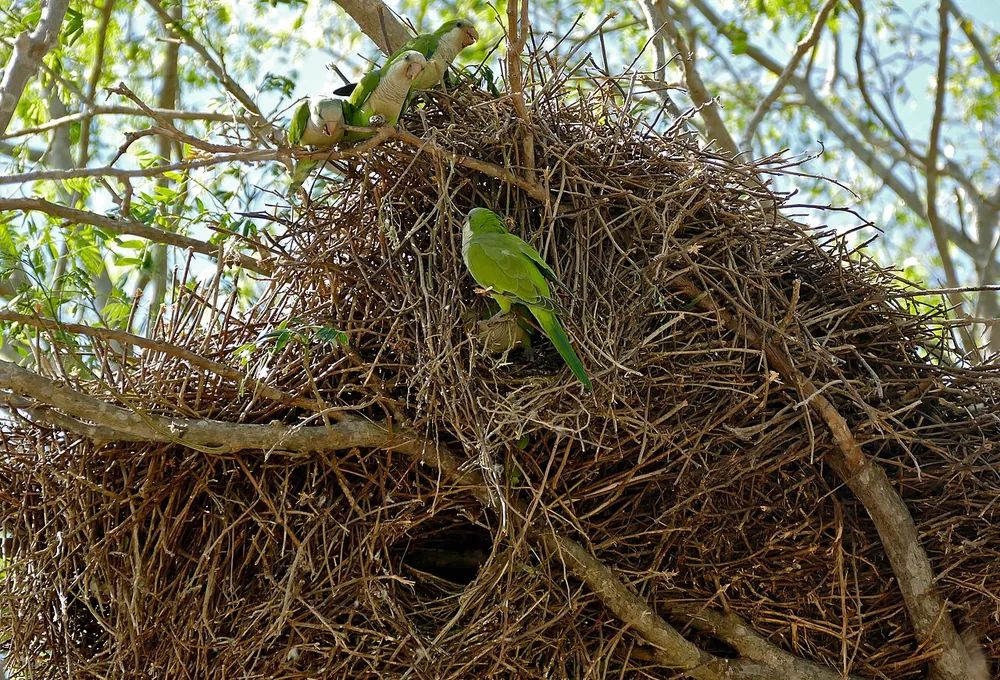
Up high, given the choice. UF/IFAS lists attics, soffits, hollow trees, debris piles and the skirt of old fronds on palm trees. It also mentions roof rats moving into the stick nests of Quaker parrots, the monk parakeets that build on light poles and palms around South Florida. Less often they'll burrow in a canal bank or under a sidewalk.
Noises in the ceiling or chewed fruit in the yard? One call puts you through to a licensed provider who works your part of Miami-Dade.
What They Eat
Fruit first. UF/IFAS describes citrus left hollow behind a neat round hole about the size of a quarter, and mangos and similar fruit missing large chunks. Roof rats also eat pet food, bird seed, livestock feed and garbage, and they'll gnaw plastic pipe to get to water. They can range up to 150 yards from the nest for a meal.
How They Get Into Houses
They arrive from above: a branch on the roof, a power line to the eave, a vine on the wall. From there they look for soft spots like open tile ends, torn vent screens, soffit gaps and the hole around the AC line set. Roof rat control covers how a provider shuts down those routes, and rodent exclusion covers the materials.
Questions From Callers
Do roof rats live in palm trees all year?
They can. UF/IFAS lists palm frond skirts as a common nest site, so a palm with a thick skirt of dead fronds may hold rats in any month.
Should traps go outside or inside?
Often both. Outdoor traps go up off the ground on rat routes, and UF/IFAS suggests setting them at dusk and pulling them at dawn to protect birds.