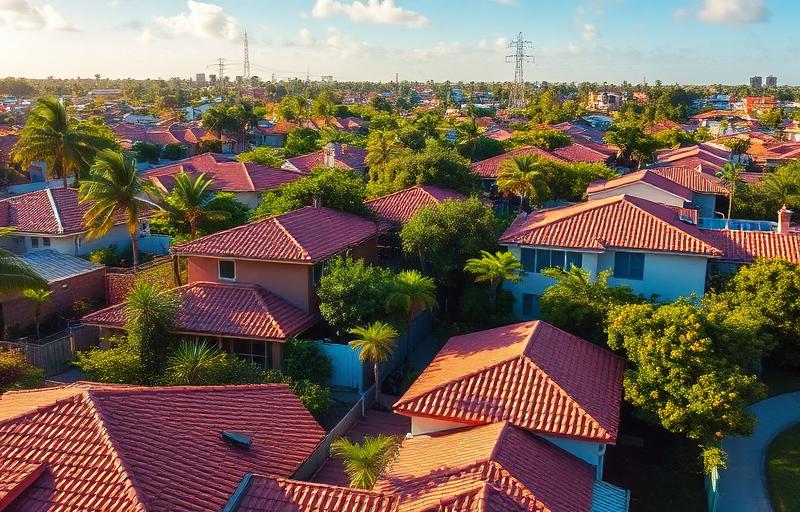
If you live in Miami-Dade County and have a rat problem, you're almost certainly dealing with roof rats. The roof rat — Rattus rattus — is the dominant rodent species in South Florida, and it's been that way for decades. Understanding this species is the first step toward getting rid of them permanently.
What Are Roof Rats?
Roof rats are medium-sized rodents, typically 6 to 8 inches in body length with a tail that's often longer than the body itself. They're also called black rats or ship rats. Their defining characteristic is their climbing ability. Unlike Norway rats, which burrow underground, roof rats prefer elevated spaces: attics, tree canopies, rooflines, and power lines.
They're sleek, agile, and fast. They can climb stucco walls, run along fence tops, and jump several feet between branches and rooftops. If you've ever heard scratching or scurrying sounds above your ceiling at night, that's almost certainly a roof rat.
Why Roof Rats Dominate Miami
Miami is essentially a perfect habitat for roof rats. Here's why they thrive here more than almost anywhere else in the country:
- No winter kill-off. South Florida's tropical climate means rats breed year-round. There's no cold season to thin the population.
- Abundant food sources. Mango trees, avocado trees, citrus, coconut palms — Miami's fruit trees provide a constant food supply. Roof rats are especially fond of fruit.
- Tree canopy access. Dense tree cover gives roof rats highways from yard to yard and tree to roof. Overhanging branches touching rooflines are the number one access point.
- Aging housing stock. Many Miami homes were built in the 1950s through 1980s. Decades of settling, weather damage, and renovations create gaps in soffits, fascia, ridge vents, and utility penetrations.
- Dense neighborhoods. From Coral Gables to Kendall to Hialeah, dense residential areas mean rats can move between homes easily.
How Roof Rats Enter Your Home
Roof rats can squeeze through any opening larger than half an inch — roughly the size of a quarter. Common entry points in Miami homes include:
- Soffit-fascia gaps where the roof meets the wall
- Damaged or missing ridge vent screens
- Uncapped plumbing vent pipes on the roof
- A/C line penetrations through exterior walls
- Electrical service entry points
- Missing or deteriorated soffit screens
- Gaps around garage doors
- Deteriorated weather stripping on doors
Most Miami homes have 10 to 20 or more potential entry points. That's why rodent exclusion — sealing every single gap — is the only permanent solution.
Signs You Have Roof Rats
The most common signs Miami homeowners notice:
- Scratching sounds at night — especially in the attic or ceiling. Roof rats are nocturnal.
- Droppings — spindle-shaped, about half an inch long. Found in attics, along walls, near food sources.
- Gnaw marks — on wiring, wood, PVC pipes, and even aluminum. Rats gnaw constantly to keep their teeth worn down.
- Greasy rub marks — dark smudges along walls, pipes, and beams where rats travel the same routes repeatedly.
- Damaged insulation — shredded, flattened, or contaminated with droppings and urine.
- Musty odor — a distinctive smell from urine, droppings, and nesting materials.
For a complete breakdown, read our guide on signs you have rats in your Miami attic.
Why Poison Doesn't Work on Roof Rats
Here's what happens when you use poison: the rat eats the bait, crawls into your wall or attic to die, and decomposes for weeks. You end up with a horrible stench that's nearly impossible to locate, plus flies and secondary pests attracted to the carcass.
Worse, poison doesn't stop new rats from entering. You've killed a few, but the entry points are still open. More rats move in within days. That's why pest control companies that rely on poison put you on monthly contracts — they need to keep coming back because their method doesn't actually solve the problem.
Read our full analysis: Why rat poison doesn't work (and what does).
How to Get Rid of Roof Rats Permanently
The only approach that works long-term combines three steps:
1. Trapping
Commercial-grade traps placed in active runways — attic spaces, wall voids, and along roof lines. Trapping removes rats cleanly and lets us monitor the population until activity stops completely. No poison means no dead rats decomposing in your walls.
2. Exclusion
This is what separates a permanent fix from a temporary one. We seal every entry point with steel mesh, metal flashing, concrete, or hardware cloth. Every gap, crack, and hole gets closed. Rodent exclusion is the most important step in the process.
3. Prevention
Trim tree branches at least 4 feet from your roofline. Pick up fallen fruit. Secure trash cans. Eliminate standing water. These steps reduce the attractants that bring roof rats to your property in the first place. Our rat-proofing guide covers everything.
Roof Rat Cleanup and Attic Sanitization in Miami
After the rats are gone and the entry points are sealed, cleanup matters. Rat droppings, urine, and nesting materials in your attic aren't just disgusting — they're a health hazard. Leptospirosis, salmonella, and other pathogens can survive in contaminated insulation for months. Professional attic cleanup and sanitization removes the contamination and restores your attic to a safe condition.
Roof rats are Miami's most persistent pest problem. But they're solvable — permanently — with the right approach. No poison. Just trapping, exclusion, and sealing every gap so they never come back.
Contact us for a free roof rat inspection or call (305) 555-0147.